Product DNA-Messenger communication layer

DNA-Messenger
Post-Quantum P2P Communication

DNA-Messenger is the communication layer of the CPUNK protocol: a post-quantum, P2P messenger that uses DNA identities instead of phone numbers, and is designed to resist both classical and quantum attacks.

Most privacy preserving communication app in the world. Clients: Desktop (under development) · Mobile (planned)
Overview

What DNA-Messenger is designed to solve

Most messengers depend on central servers and classical cryptography. DNA-Messenger focuses on three things: identity, quantum safety, and real P2P communication.

Core concept

Identity-first, post-quantum messenger

DNA-Messenger uses DNA identifiers (your CPUNK identity) as the addressing layer. Messages are encrypted using NIST-selected post-quantum algorithms and routed peer-to-peer whenever possible, with support for offline delivery via distributed storage.

  • No phone numbers or email addresses required.
  • Designed to avoid central message servers where possible.
  • Built for long-term security against future quantum attacks.
Security

Post-quantum encryption stack

DNA-Messenger uses a combination of ML-KEM / ML-DSA (Kyber/Dilithium family), AES-256-GCM, and SHA-3 to protect session keys, message contents, and identities. Uses only 20 bytes header (metadata) and collects no personal information.

Topology

P2P with offline delivery

When both parties are online, messages flow peer-to-peer. When one party is offline, messages can be stored in distributed mailboxes so they can be retrieved later without relying on a single central server.

Architecture

How DNA-Messenger works

High-level workflow

DNA-Messenger is designed around a local-first, P2P architecture with a minimal bootstrap layer. A simplified view of how a message is sent:

  • You address your contact via their DNA identity, not a phone number.
  • Your client discovers their node using DHT / bootstrap infrastructure and post-quantum key exchange is used to set up session keys.
  • Messages are encrypted end-to-end and sent via TCP or other transport channels. Metadata is minimized as much as possible.
  • If the recipient is offline, messages are written into outgoing mailboxes replicated across several bootstrap nodes.
  • When the recipient comes online, their client checks those mailboxes, fetches pending messages, and decrypts them locally.

The objective is to combine the convenience of modern messaging apps with infrastructure that remains viable in a post-quantum world.

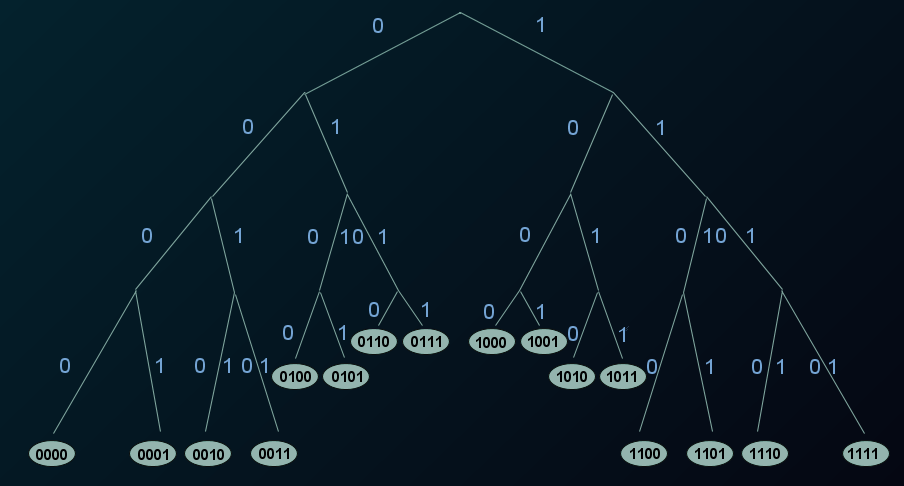
DNA-Messenger Kademlia Architecture Diagram
DHT Nodus peer to peer discovery / XOR distance
Usage

Who DNA-Messenger is for

DNA-Messenger is for privacy maximalists, and communities who want secure communication without compromise. We collect nothing, store nothing, and leak nothing. Your identity and messages stay yours — protected for the future.

Technical users & builders

Developers who want to integrate post-quantum messaging into their own apps, tools, or bots using DNA identities as the addressing layer.

Communities & DAOs

Groups that need communication channels which are not tied to Big Tech accounts and are resistant to large-scale surveillance or deplatforming.

High-sensitivity environments

Users and organizations that want to stay ahead of the curve on quantum-era threats and avoid harvesting of encrypted traffic today that could be decrypted tomorrow.

Clients

Client roadmap & integrations

Client roadmap

DNA-Messenger is being developed step-by-step, starting from the core protocol and progressively adding user-facing clients and features.

  • Phase 1: Core protocol, CLI tools, and developer APIs.
  • Phase 2: Desktop client prototypes for Linux and other platforms.
  • Phase 3: Mobile clients and voice/video calling experiments.
  • Phase 4: Deeper integration with DNA identity, Proof of Humanity, and CPUNK governance tooling.

The goal is to keep the protocol open and flexible so that third-party clients and integrations can emerge around the core CPUNK stack.

Client gallery placeholder
Later: collage of desktop UI, mobile UI, or branding visuals.
This section can also include badges like “Linux”, “Windows”, “Android” once clients are publicly available.

Build on DNA-Messenger

DNA-Messenger is the communication backbone of the CPUNK ecosystem. If you are interested in integrating it into your own project, start from the protocol docs and join the community channels for technical discussion.

As the protocol matures, this page can be extended with client download links, public APIs, and integration examples.