Post-Quantum
Encrypted Messenger
A decentralized messenger with NIST Category 5 post-quantum encryption. No centralized message servers, no phone numbers, minimal metadata by design. Messages are routed through the Nodus network — encrypted end-to-end with Kyber1024 + AES-256-GCM.
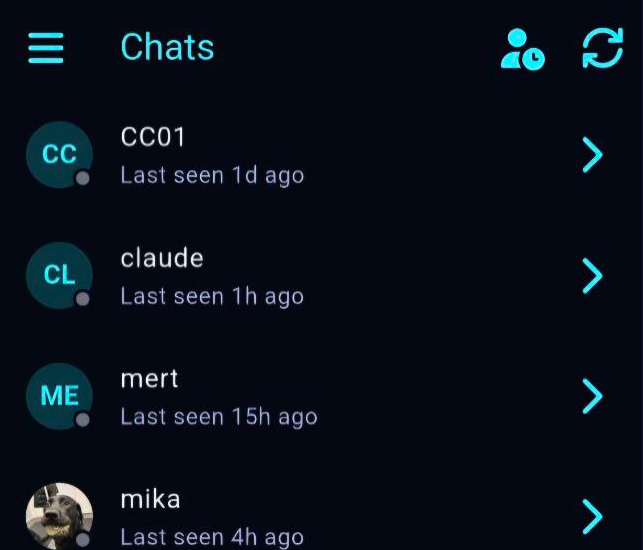
Private messaging. Public channels. Send funds in chat.
Encrypted direct messages, Telegram-style public channels, personal wall posts, and the ability to send funds directly in conversation — all running on a decentralized network with no centralized message servers.
Encrypted Direct Messages
Private conversations encrypted with Kyber1024 + AES-256-GCM. Address contacts by their DNA name — no phone numbers or email needed.
- Delivery and read receipts
- Offline message queue with 7-day TTL
- Cross-device sync via recovery phrase
Public Channels
Open chat rooms where people hang out and talk — like Telegram groups, but decentralized. Every message is signed with Dilithium5 so you always know who said what.
- Real-time group conversations
- React, reply, copy, and repost
- Image sharing and media support
Wall Posts
A personal public feed tied to your DNA identity. Share updates, thoughts, or announcements that anyone can see on your profile.
- Signed with your identity key
- Visible on your public profile
- Stored on the decentralized network
Group Messaging
Decentralized groups with GEK encryption — efficient key distribution for groups of any size. Automatic key rotation on member changes.
- Group ownership transfer
- P2P group invitations
- Forward security via GEK versioning
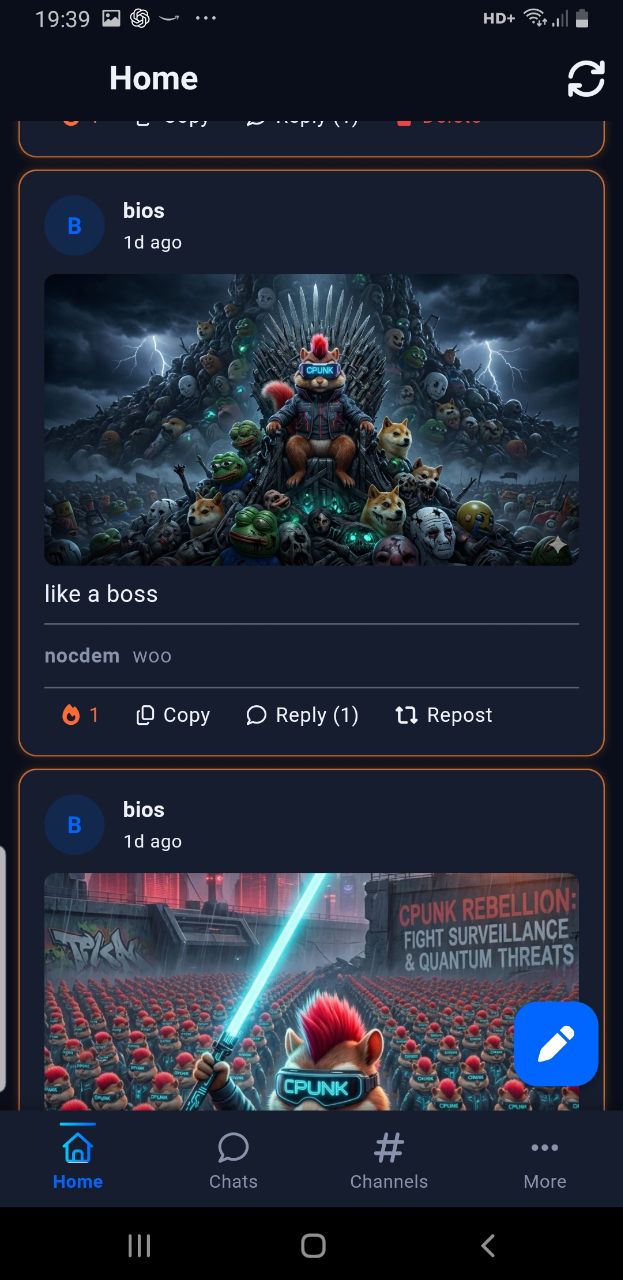
Your timeline
Wall posts, images, and reactions
The home feed shows wall posts from people you follow. Share images, react, reply, repost — a decentralized social layer built on top of the encrypted network.
- Image posts with full media support
- Reactions, threaded replies, and reposts
- All content signed and stored on the DHT
NIST Category 5 — maximum quantum resistance
256-bit security level. Protected against both current classical attacks and future quantum computers. Your keys never leave your device.
| Algorithm | Standard | Purpose |
|---|---|---|
| Kyber1024 | ML-KEM-1024 (FIPS 203) | Key encapsulation & exchange |
| Dilithium5 | ML-DSA-87 (FIPS 204) | Digital signatures |
| AES-256-GCM | NIST | Symmetric message encryption |
| SHA3-512 | NIST | Cryptographic hashing |
| BIP39 | Bitcoin Standard | 24-word recovery phrase |
No Central Servers
Messages are routed through a distributed network of independent nodes. No centralized server stores your conversations.
IP Privacy
Your IP address is not shared with message recipients. All routing happens through the Nodus network.
Minimal Metadata
Minimal routing metadata. No phone numbers, no contact graph, no centralized social mapping.
No Phone Number
Identity via DNA name tied to your cryptographic key pair. No personal data required.
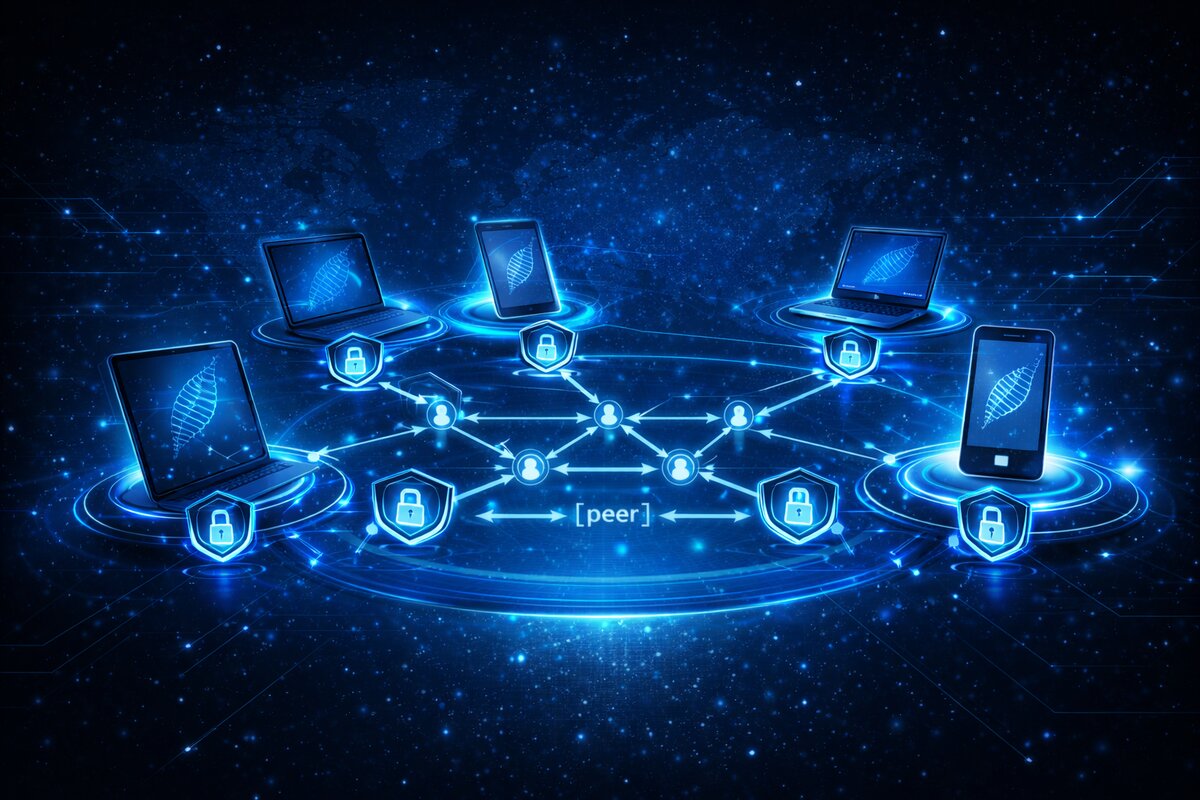
Decentralized peer-to-peer stack
DNA Connect runs on Nodus — a post-quantum Kademlia DHT with ML-DSA + ML-KEM support, BFT witness consensus and a distributed production cluster.
Post-quantum C engine under the hood
All cryptography, messaging, and DHT operations run in a native C library (libdna). Flutter, Android, and CLI connect through thin FFI bindings — zero crypto in managed code.
Modular Engine
Async task queue with domain modules: messaging, identity, contacts, DHT, backup. Thread pool for concurrent execution.
Cross-Platform
Same C code compiles for Linux, Windows, and Android. Flutter via dart:ffi, Android via JNI, CLI for automation.
Open Source
All components are open source under the Apache 2.0 license.
NIST Category 5
ML-KEM-1024 key exchange, ML-DSA-87 signatures, SHA3-512 hashing, AES-256-GCM encryption. Maximum quantum resistance.
Get DNA Connect
Open beta — available for Android, Linux, and Windows. Open source under Apache 2.0.
Open source — GitLab
Join the movement
Download DNA Connect, join the conversation, and help build the future of private communication.